
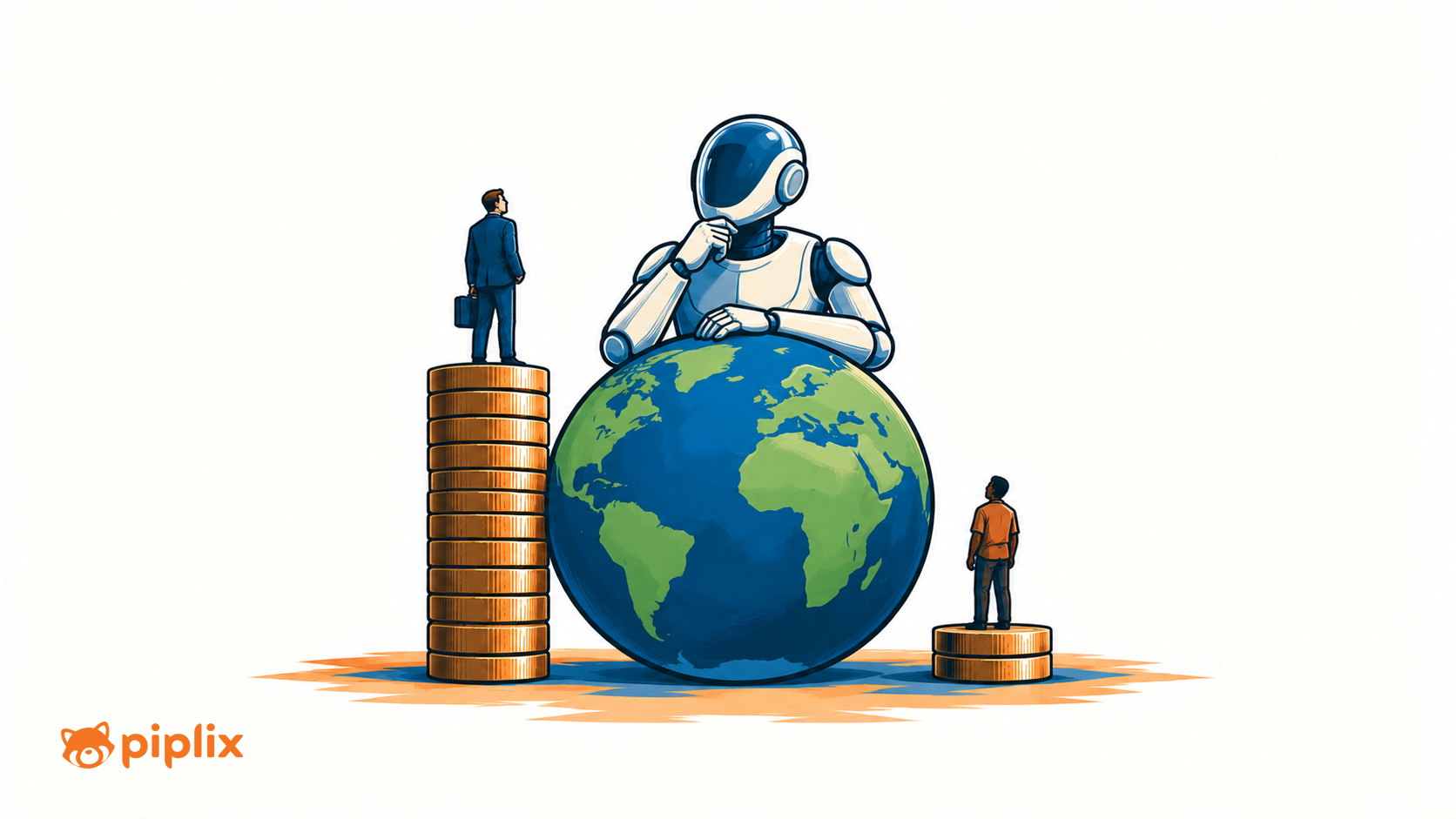

Officials from the IMF and OECD warned on 22 October that artificial intelligence could widen economic gaps between high- and low-income countries without stronger infrastructure and skills. Reuters reported OECD estimates of 0.4% to 1.2% potential annual productivity growth across member countries and IMF estimates that about 40% of global jobs may be exposed to AI.
The International Monetary Fund (IMF)International Monetary Fund (IMF) refers to the International Monetary Fund (IMF) is an international organization established in 1944 at the Bretton Woods Conference to promote...Read More and Organisation for Economic Co-operation and Development (OECD) have reportedly warned that artificial intelligence could widen economic inequality between countries. Advanced economies may benefit more from AI investment, infrastructure and skilled workers, while developing nations RiskRisk is the possibility that the actual outcome of a trade, investment, or financial decision differs from the expected outcome and causes a loss or other unwanted result. Risk...Read More falling behind. The organisations emphasise the importance of digital infrastructure, education and supportive policies to ensure AI-driven growth is more widely shared.
