
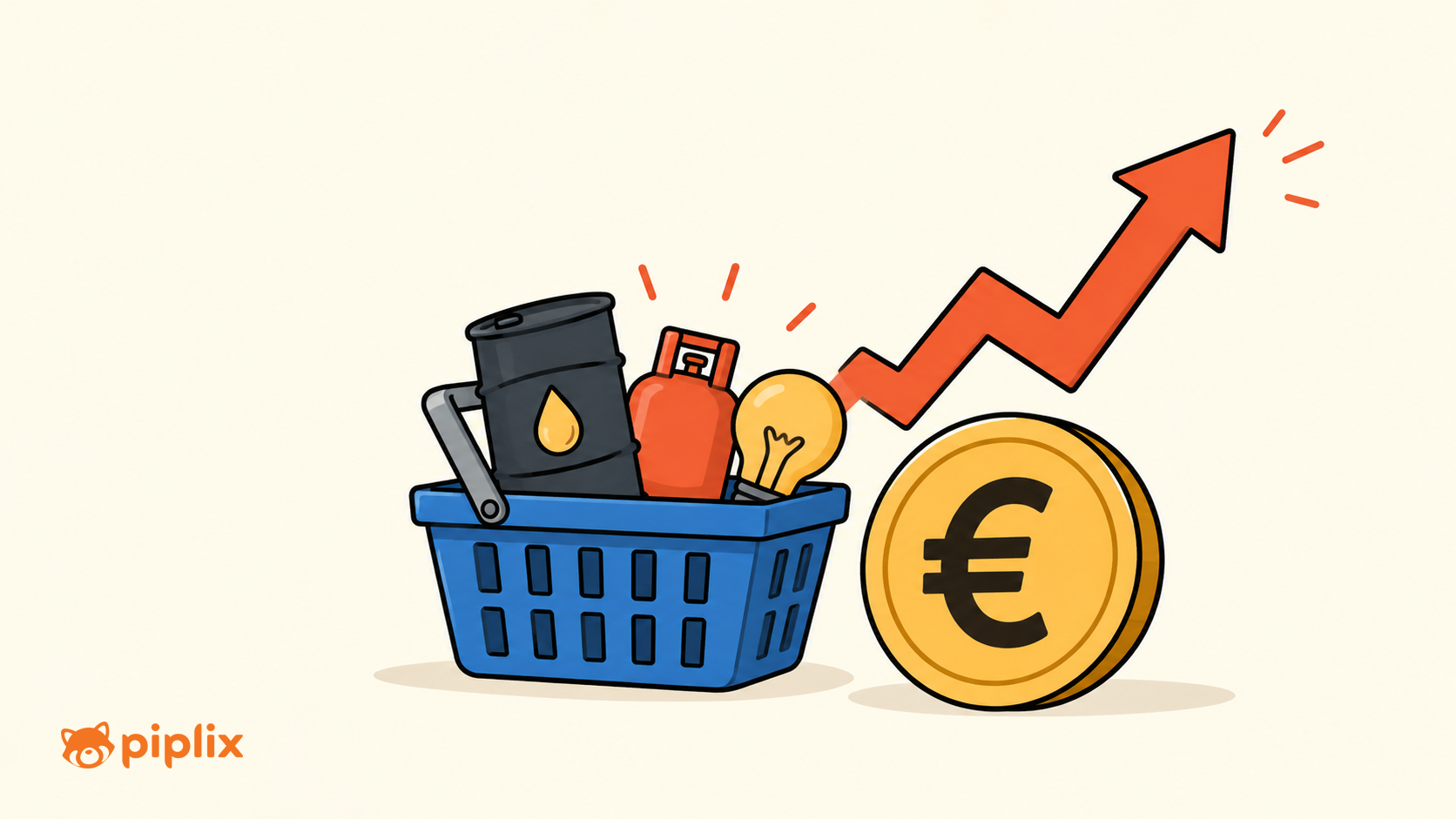

Eurostat confirmed on 16 October that euro-area consumer InflationA broad rise in prices that reduces money’s purchasing power. Central banks watch inflation because it affects interest-rate decisions.Read More was 3.8% year on year in September 2026, up from 3.2% in August. Energy prices increased 18.9% annually and contributed 1.71 percentage points to the headline rate, while services contributed 1.52 points. Inflation excluding energy, food, alcohol and tobacco stood at 2.5%. The headline 3.8% figure was already estimated on 2 October; the final component BreakdownA breakdown occurs when price moves below a meaningful support level, range floor, trend boundary, or pattern boundary and the move is accepted rather than immediately rejected....Read More is the new reporting element.
eurozoneThe eurozone is the group of European Union countries that have adopted the euro as their official currency. It is a subset of the EU rather than another name for the entire uni...Read More inflation was reportedly confirmed at 3.8% in September, driven largely by an 18.9% surge in energy prices. Rising fuel and electricity costs increased pressure on households and businesses, raising concerns about persistent inflation. The figures could influence European Central bankThe institution that sets monetary policy for a country or currency area, including interest-rate decisions that can move currencies.Read More Interest rateThe price of borrowing money, set or influenced by central banks. Differences in expected interest rates are a major driver of currency demand.Read More expectations and affect the euro as investors assess the region’s economic outlook.
